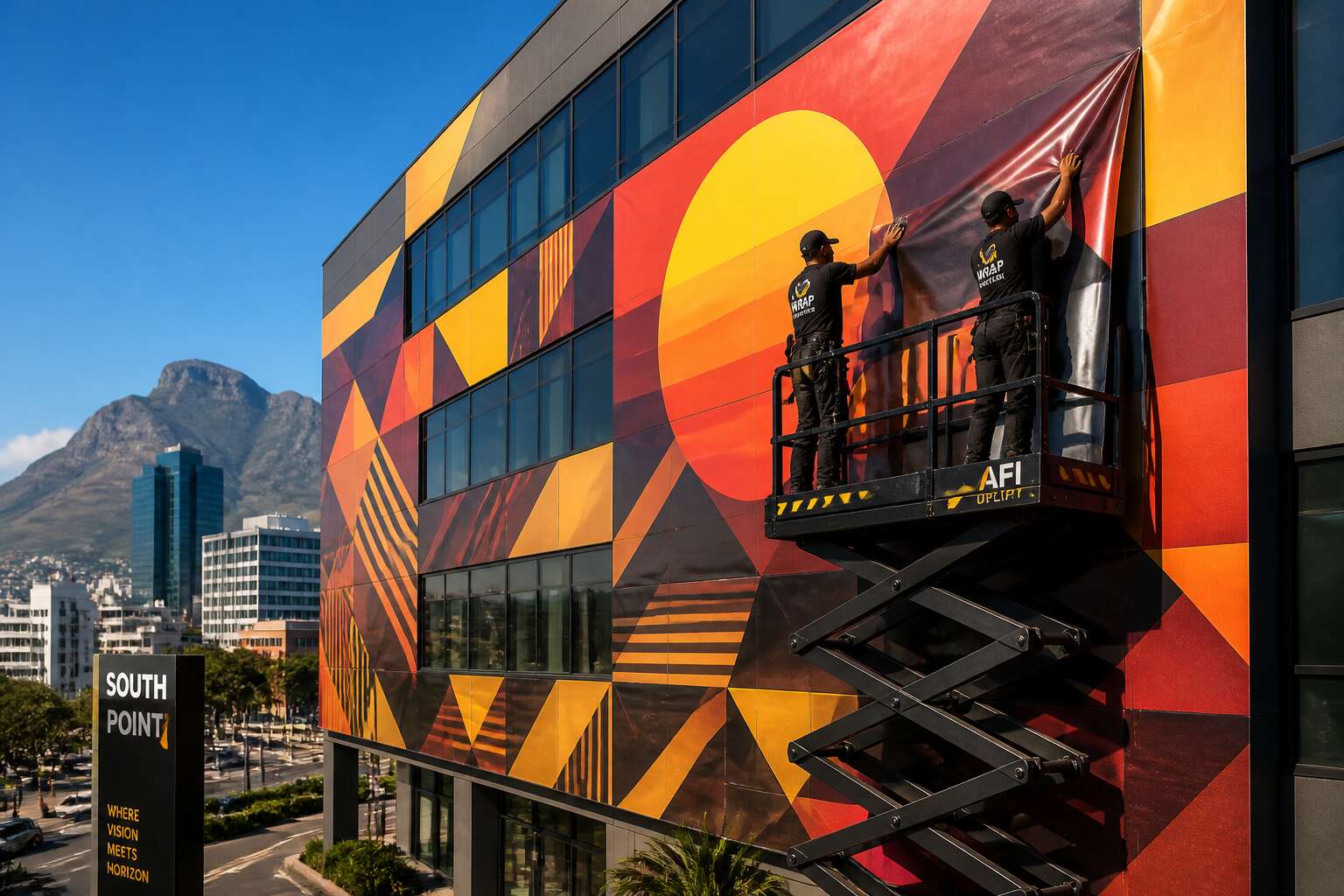
The Rise of Architectural Vinyl Wraps in Modern South African Design
Why South African Architects Are Choosing Vinyl Wraps
Walk down any Johannesburg commercial strip and you will notice weathered concrete facades suddenly looking sharp. Architectural vinyl wrap South Africa has become the preferred tool for this transformation. The material offers a cost effective alternative to repainting or cladding, and it withstands UV exposure and dust without losing colour.
Architects choose vinyl wraps for several reasons:
- Speed: installation takes days, not weeks.
- Design flexibility: custom prints mimic timber, stone, or bold graphics.
- Reversibility: owners can update without structural commitment.
This approach suits the local context. With load shedding disrupting construction schedules, a dry apply film that does not rely on heavy machinery gives contractors a reliable edge.
Key Benefits for Interior and Exterior Spaces
Five years ago, a vinyl wrap on a building facade signalled a pop-up shop. Now it appears on bank headquarters and private residences alike. The rise of architectural vinyl wrap south africa is about control, not cost. Control over texture, control over maintenance, control over the way a structure ages.
Interior columns and lift lobbies benefit from a seamless film that follows curves and hides existing wear. Exterior surfaces, from boundary walls to entrance canopies, gain a uniform finish that resists grime and graffiti tags. The film bonds to common building materials equally well.
Typical applications range from:
- Lift interiors
- Reception counters
- External columns
- Parapet fascias
As more specifiers adopt the material for permanent installations, its role in modern South African design keeps expanding.
Comparing Vinyl Wraps to Traditional Building Materials
Granite cracks under thermal stress. Timber splinters after a single storm. Traditional materials have served buildings well, but they resist the very conditions they face. Architectural vinyl wrap south africa makes a lighter case. A roll of film weighs less than one stone slab, and mounting it requires no cranes or curing periods. For a retrofit of a 1980s office block, traditional cladding means demolishing part of the structure. A wrap means cleaning the substrate and applying a precision-cut sheet.
Consider the practical differences:
1. On-site time shrinks from weeks to days
2. Weight loads stay close to zero
3. Future removal leaves the original material intact
Specifiers now weigh wraps against aluminium panels and high-pressure laminates. The finished surface no longer demands a heavy budget.
Sustainability and Eco-Friendly Aspects
The rise of architectural vinyl wrap south africa comes with a quieter story about resources. Every square metre of film carries a fraction of the embodied carbon found in cast concrete or anodised metal. The substrate stays untouched, which changes the arithmetic of renovation entirely.
Old facades gain weather resistance without losing their original fabric. When a building reaches its next life cycle, the film peels away and the structure beneath remains available for reuse. That reversibility is rare among cladding systems.
- Less embodied energy than factory formed panels
- No curing water or chemical runoff on site
- Lighter transport loads reduce delivery emissions
Architectural vinyl wrap south africa also lowers the carbon cost of maintenance. Surface renewal happens in days, postponing major interventions. Specifiers are starting to treat the film as a strategic asset, not a decorative extra.
Applications of Architectural Vinyl Wraps Across South Africa
Commercial Spaces: Retail and Office Transformations
In a Johannesburg flagship store, the visual hum of a retail brand is often everything. Nearly 70% of purchase decisions are made in-store, driven by atmosphere rather than logic. Here, architectural vinyl wrap south africa serves as a shifting skin, turning a barren concrete shell into a curated stage. It is a cheap trick of light and shadow.
For retail spaces, the application is immediate and brutal. Think of a boutique in Cape Town where a matte, charcoal wrap swallows the glare from a glaring window, allowing the merchandise to whisper instead of shout. It is a tool for creating zones on a budget.
– Creating textured feature walls that suggest stone or aged timber
– Rebranding a storefront overnight without breaking the leasing contract
– Transforming window displays into obscuring, theatrical screens
Offices, too, are haunted by their dull grey cubicles. A vinyl wrap can lay a new narrative over the old bones of a corridor, adding a graphic timeline or a saturated colour field that mimics the company’s online presence. It allows for a rapid, low-disruption metamorphosis, leaving the drywall untouched and the landlords appeased. This is a practical material for a nation that needs to update its image swiftly.
Residential Projects: Kitchens, Bathrooms, and Feature Walls
There is a quiet intimacy to a home renovation, a process of adjusting spaces to match current needs. In South African homes, architectural vinyl wrap south africa has become a common solution. A kitchen backsplash, once a permanent fixture demanding demolition, now peels on in an afternoon. The tactile grain of slate or brushed brass appears over laminate.
Bathrooms offer a particular challenge. I have seen steam and moisture ruin lesser materials. Certain vinyl grades handle this without complaint. Feature walls, too, respond well to this treatment. A single textured panel can alter the perception of an entire living space.
- Refacing cabinet doors to match new tastes
- Covering tiles in rental properties without deposit loss
- Accent walls that shift with the light
This is a pragmatic upgrade, one that transforms the house without knocking down a single wall. The choice of architectural vinyl wrap south africa makes it possible.
Hospitality and Tourism: Hotels and Restaurants
The hospitality sector trades on atmosphere, yet the furniture and fittings take a beating. A restaurant in Cape Town might refresh its interior three times in a decade. Architectural vinyl wrap south africa gives owners the ability to change a dining room’s personality over a quiet weekend, not a construction season.
Lobbies, corridors, and guest bathrooms endure constant traffic. Scuffs appear. Styles date. Hotel managers I have spoken with value the speed and the lack of disruption.
- Rebranding a hotel chain’s signature restaurant overnight
- Updating tired front-of-house counters without replacing timber
- Protecting high-touch surfaces in guest rooms
The durability of quality vinyl film means a property maintains its standard between renovations. For tourism operators, that translates into repeat business and strong reviews.
Healthcare and Institutional Buildings
Walk through any public hospital in Johannesburg and you will see the problem. Walls scuffed by trolleys, corners battered by wheelchairs. Paint and conventional cladding struggle here.
Architectural vinyl wrap south africa offers an alternative. A single sheet of film covers a reception desk, a lift interior, or a corridor wall. It withstands the harsh sanitisers used in clinical environments. It does not chip or peel. In one private clinic I visited, the vinyl outlasted the previous paint job by five years.
Institutional priorities are practical:
- Protecting fire rated doors without altering certification
- Covering scratched security screening panels
- Updating wayfinding without repainting wings
- Creating hygienic surfaces in staff canteens
Schools and municipal buildings face the same wear with smaller budgets. Vinyl wrap lets them refresh one corridor at a time. No scaffolding. No wet trades. Just a clean surface and a calm weekend!
Renovation and Refurbishment Projects
Renovation projects require surfaces that respect existing conditions. Architectural vinyl wrap south africa offers a reversible layer for ageing finishes. In a refurbishment I observed, contractors covered cracked plaster while preserving the original cornices. The film bent around them without issue.
This approach works for heritage and ordinary buildings. A Cape Town townhouse had stained wooden doors that could not be sanded again. Vinyl wrap refreshed them in a few hours.
Common renovation applications include:
- Adhering to curved staircases and panelled walls
- Hiding repair patches in plastered ceilings
- Matching new partition walls to existing finishes
Selecting the Right Vinyl Wrap Material for South African Conditions
Understanding Weatherability and UV Resistance
South Africa’s UV index regularly exceeds 11, a level the World Health Organization classifies as extreme. A vinyl wrap specified for a Cape Town coastline faces salt spray. The same material on a Johannesburg facade contends with intense solar radiation. For architectural vinyl wrap South Africa, weatherability is the defining specification.
Cast vinyl films outperform calendered alternatives under sustained UV exposure. They resist shrinkage and colour fade. The adhesive layer carries equal weight. A UV stabilised, high tack adhesive prevents edge lifting. In my experience, this is the most common failure on exterior installations.
The variables that accelerate degradation:
- Roof orientation and pitch
- Reflective glass proximity
- Altitude, which raises UV intensity roughly 10% per 1000 metres
The material must match the site’s microclimate. A blanket recommendation for the province ignores these differences.
Fire Ratings and Building Code Compliance
The National Building Regulations (SANS 10400) require interior finishes to meet specific flame spread criteria. For architectural vinyl wrap south africa, this means requesting the fire certificate before approving a sample. I have watched specifiers choose a film for colour, only to discover its flame spread index exceeds the code limit for a corridor.
Material selection must also consider the substrate. Gypsum board, steel, and timber each react differently to heat. A wrap with a high tack adhesive may perform well on one surface and delaminate on another. This choice is central to architectural vinyl wrap south africa projects, where compliance is non-negotiable.
- The film’s fire classification per SANS 10177
- The substrate’s contribution to fire load
- The adhesive’s behaviour under elevated temperatures
Developers often overlook these details. Fire compliance remains a legal obligation, and the test reports must be matched to the exact building spec.
Adhesive Types and Substrate Preparation
Selecting the right film for South African conditions begins with the adhesive. Acrylic adhesives suit porous surfaces like sealed timber. Solvent-based adhesives handle non-porous steel. Coastal humidity and inland UV alter bond strength, so the adhesive must match the microclimate of the building.
Substrate preparation decides longevity. Gypsum board needs a sealed surface. Timber requires sanding and dust removal. Steel demands degreasing. Skip these steps and edge lifting appears within months.
Consider these factors when matching adhesive to substrate:
– Surface porosity
– Ambient temperature at installation
– Moisture exposure
– Film dimensional stability
For architectural vinyl wrap south africa, the adhesive is part of the system. A high tack adhesive on a flexible substrate can cause tenting. A low tack adhesive on steel may fail. The specifier must test the full assembly, not the film alone. The choice of architectural vinyl wrap south africa depends on this pairing.
The Installation Process and Best Practices in South Africa
Surface Preparation and Priming Techniques
In my years installing across Johannesburg and Cape Town, I have learned that ninety percent of adhesive failures trace back to careless surface preparation. The art of architectural vinyl wrap south africa demands patience before precision. Dust, oil, and old paint residues cause the adhesive to fail hours after application, leaving bubbles.
Thorough cleaning with isopropyl alcohol removes contaminants without leaving a film. On glossy surfaces, light abrasion with a scotch-brite pad creates the necessary roughness. On porous materials, a quality primer seals the substrate and prevents uneven absorption. The film must then be applied slowly, with a squeegee working from the centre outward.
The priming technique varies by substrate:
- Use a solvent-based primer for non-porous metals.
- Use a water-based primer for drywall and plaster.
- Apply thin, even coats and allow full cure before wrapping.
Priming ultimately determines the lifespan of the wrap.
Precision Cutting and Application Methods
Under the African sun, where heat shifts between morning and afternoon, architectural vinyl wrap south africa demands a measured hand. I begin every installation by unrolling the film onto a clean table and scoring it with a fresh blade running along a metal straightedge. Precision cutting is a ritual of sharp edges and steady pressure, and it never fails me!
The application follows a logic of controlled movement. Working from the centre outward, I press the film with a felt squeegee angled at forty-five degrees, pushing air in one smooth pass. On humid days, I slow the pace. For complex reveals, a heat gun relaxes the material around corners, but only after the substrate is primed. This approach to architectural vinyl wrap south africa prevents lifting.
Key practices I keep close:
- Measure twice, cut once, using a sharp blade for every line.
- Keep a lint-free cloth nearby to catch dust mid-application.
Maintenance and Cleaning Guidelines
The care of architectural vinyl wrap south africa begins where installation ends, a quieter ritual but no less demanding. In the highveld dust and coastal salt, the film asks for attention that most materials would never require. I find myself telling clients that a soft cloth and warm water, nothing more aggressive than a mild detergent, will preserve the colour for years. Harsh solvents and abrasive pads are the enemy; they dull the surface and leave a permanent haze that no polish can lift.
Cleaning schedules depend on exposure. A northern wall facing the afternoon sun collects grime differently than a shaded passage, and both need a different rhythm. I have learned to anticipate the damage that comes from neglect, the way grime settles into every seam and corner.
– Wash in the cool of the morning, when the film is not heated by the sun.
– Rinse thoroughly with clean water to prevent soap residue.
– Dry with a microfiber cloth, moving in the direction of the wrap.
– Inspect edges and corners for lifting after heavy rains or high winds.
The maintenance of architectural vinyl wrap south africa is a small price for the transformation it delivers, but it is a price paid with regularity. I have seen wraps fail, not from poor film or faulty adhesive, but from a forgotten cleaning cloth and a stopped-up gutter. The material gives back what you invest in it, and that is a truth I carry on every site.
Post-Installation Inspection and Quality Assurance
The installation of architectural vinyl wrap south africa deserves a final act of scrutiny. I walk the finished surface with a torch, checking every seam under raking light. Air pockets reveal themselves, and I mark them with chalk before they harden into permanence.
Quality assurance means looking for what the eye wants to overlook. The South African sun is unforgiving with imperfections. I press my palm flat against the film, feeling for ridges that escaped sight.
- Seam alignment and edge lift
- Air bubbles or trapped dust
- Colour consistency across panels
- Contour sharpness around windows and doors
The final signoff happens after 24 hours, once the adhesive has settled. I return to confirm the installation survived its first night and that every edge still holds. The procedure is methodical. A rapid finish matters less than a wrap that stays quiet for years.
Cost Considerations and Return on Investment for Architectural Vinyl Wraps
Material Costs and Budgeting for Projects
Budgets in South African construction rarely survive the first revision. For architects watching a beautiful facade spec get cut at the final hour, architectural vinyl wrap south africa keeps the design vision intact without rewriting the financial plan. The material itself is the primary cost.
The pricing structure rewards preparation. A smooth, primed substrate reduces labour hours, which often exceeds the material spend. Waste also matters. Every miscalculated sheet adds to the final invoice.
- Material grade, from standard to textured finishes
- Substrate condition and remedial work required
- Site accessibility and scaffolding needs
That last item is where Johannesburg and Cape Town projects diverge sharply. The return on investment appears when you compare the installed cost against the lifespan. The arithmetic favours vinyl in renovations where the existing structure stays intact.
Installation Costs vs. Traditional Cladding
Construction inflation punishes delay, yet the gap between vinyl and traditional cladding goes beyond sticker price. Architectural vinyl wrap south africa undercuts traditional systems on labour intensity alone. The real return on investment appears when you count what you avoid paying for: structural reinforcement, heavy anchorage, and the weather delays that stretch timelines. Traditional cladding demands substructure and crane time. Architectural vinyl wrap south africa application takes days, not weeks. Over a decade, the cost gap widens once maintenance cycles and the energy performance of a sealed envelope enter the equation.
Three factors decide the financial outcome:
- Speed of installation and its cascading effect on project financing.
- The capacity to rebrand without demolition.
- The building’s residual value after the wrap’s service life.
For architects, the choice carries weight. You are shaping what a structure can become without the permanent burden of cladding.
Durability, Lifespan, and Replacement Cycles
Architectural vinyl wrap south africa holds its value through material science. Cast films used in exterior installations carry a service life of ten to twelve years. Some manufacturers extend warranties when the substrate is properly prepared, so replacement cycles become budgetable events, not emergencies.
The return on investment emerges over a decade. A wrapped façade avoids the compounding costs of repainting, resealing, and repairing cracked cladding panels. When the wrap reaches its end of service, removal and reapplication cost a fraction of full cladding replacement. The building envelope remains intact underneath, preserving thermal efficiency.
- Ten year warranties on premium cast films
- Replacement costs run roughly 40 percent of traditional re-cladding
- No structural load increase, extending the asset’s usable lifespan
Architects reviewing capital expenditure will find architectural vinyl wrap south africa offers a predictable cycle, keeping the building in service long after the outlay.
Enhancing Property Value with Vinyl Wraps
The initial outlay for architectural vinyl wrap south africa often prompts a sharp intake of breath from finance committees. Yet this reaction ignores the more insidious drain of traditional upkeep, where maintenance budgets bleed slowly through recurring painting cycles and facade repairs. A vinyl investment converts that unpredictable operational expense into a fixed, manageable capital cost with a defined lifespan.
Consider the arithmetic of a modern commercial block. Over a decade, the cumulative cost of scaffolding, labour, and material for conventional cladding restoration can exceed the initial installation by a considerable margin. Vinyl wrap sidesteps those recurring expenses entirely. The building retains its aesthetic integrity while the balance sheet retains its strength, a rare alignment of visual and fiscal prudence.
– Deferred capital: Funds reserved for future recoating become available for immediate operational needs.
– Expedited depreciation: Wraps offer a clear asset lifecycle, simplifying accounting schedules.
– Curbside appeal: A fresh exterior directly supports rental and property valuation metrics.
Property value, in the South African context, is a conversation about stewardship. A building that looks current signals proactive management, attracting tenants who expect a certain standard. When the wrap eventually reaches the end of its service life, the underlying substrate remains untouched, meaning the asset retains its structural value while the cosmetic layer is renewed. This cycle of refreshment, without renewal, is the quiet engine of long term property appreciation.




0 Comments