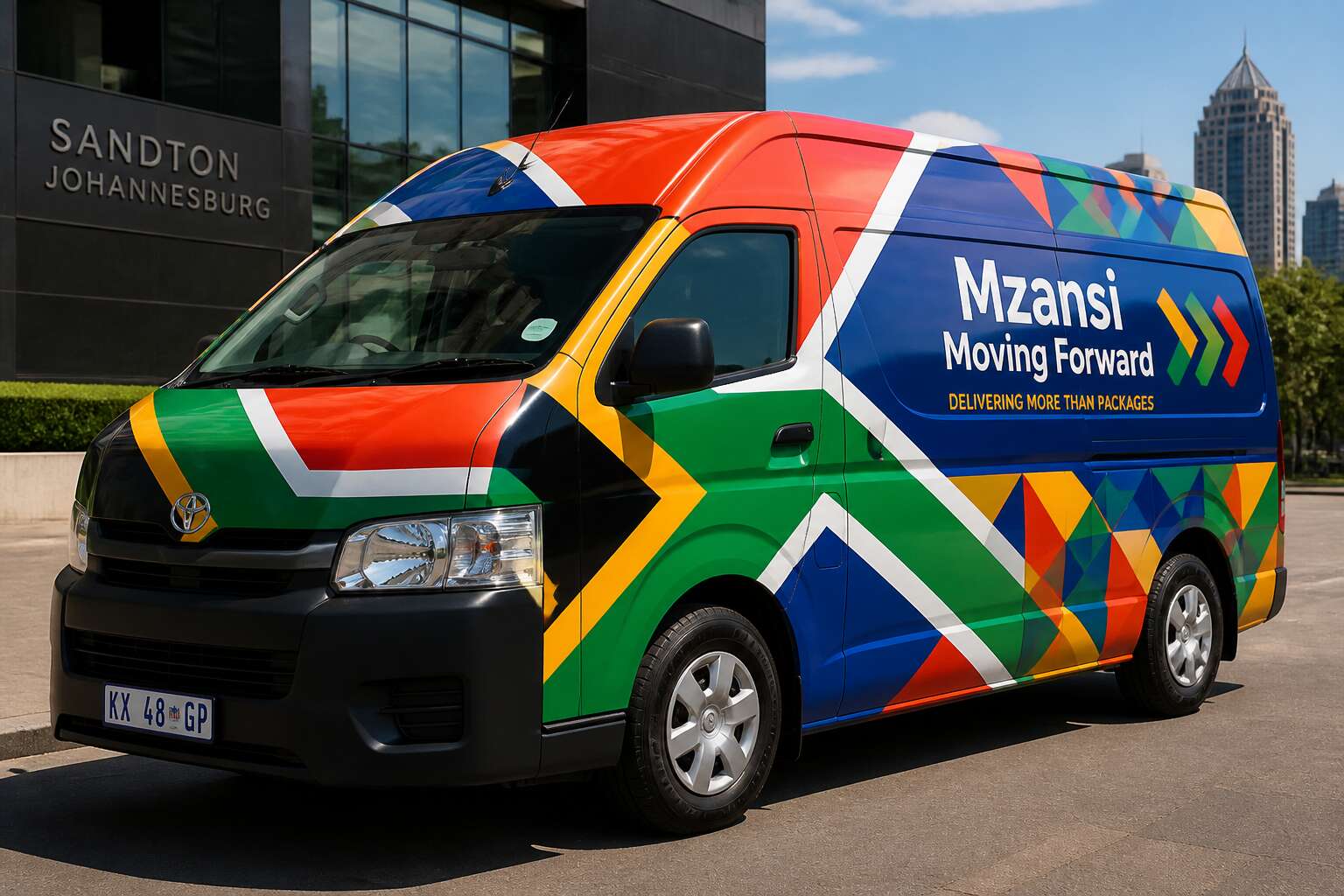
The Growing Popularity of Vehicle Wraps in South Africa
Why Businesses Choose Wraps Over Traditional Paint
South African roads demand a lot from commercial vehicles. Extreme UV rays, gravel highways, and high-pressure car washes can ruin a factory paint job in years. This is why more companies are turning to a custom printed vehicle wrap south africa. Wraps act as a sacrificial layer, protecting the original paint and retaining the vehicle’s resale value.
Businesses are also choosing wraps for their speed and cost. A full colour change by paint takes weeks. A wrap can be installed in days. This means less downtime and a faster return on investment. The design possibilities are also endless, from textured carbon fibre to high-gloss metallics, without the premium price tag of custom spraying.
Here is where wraps really change the game for local brands:
– They turn a delivery van into a 24/7 rolling billboard.
– They can be removed, updated, and replaced as campaigns evolve.
– They are tax-deductible as advertising expenses.
For the cost-conscious business owner, a custom printed vehicle wrap south africa offers a smart, results-driven alternative to tradition. It offers certainty in an uncertain economy.
Key Industries That Rely on Branded Fleets
In South Africa, a branded fleet moving through the N1 traffic has become a reliable gauge of a company’s market presence. The growth of the custom printed vehicle wrap south africa industry reflects a subtle shift in how local businesses treat their vehicles: not as assets to be parked, but as instruments of performance. Fleet managers value the installation speed, finance teams value the predictable cost, and the momentum comes from the sheer range of sectors participating.
Consider the variety:
- Construction companies display safety credentials and project portfolios on their bakkies.
- Food and beverage distributors use full-colour graphics to make routes instantly recognisable.
- Logistics firms standardise mixed fleets after mergers, creating a cohesive identity overnight.
The automotive rental sector rotates promotional campaigns across regions without committing to a permanent paint scheme. Professional services, from security to plumbing, adopt branded wrapping to signal reliability. The custom printed vehicle wrap south africa has become a standard tool for businesses that need physical assets to communicate while they work.
Cost Savings Compared to Repainting
Replacing a factory paint job on a commercial vehicle in South Africa can cost R25,000 to R60,000 depending on the vehicle class. A custom printed vehicle wrap south africa typically costs a fraction of that figure while delivering greater visual complexity.
The real savings surface over time. Wraps protect the original paint from UV damage, stone chips and minor abrasions. When a wrap needs replacing after four to six years, the underlying paint remains pristine. I have watched fleet operators gain thousands extra on resale because the factory finish stayed untouched.
The financial advantages accumulate in specific areas:
- Minimal downtime. A wrap installs in two to three days. A respray can take weeks.
- Tax treatment. Wrap costs often qualify as deductible marketing spend.
- Reversibility. A wrap removes cleanly, restoring the vehicle for auction or trade-in.
The economics shift when campaigns change. A custom printed vehicle wrap south africa can adapt to a new campaign for less than a respray.
Durability in South Africa’s Sun and Rain
The South African sun does not negotiate. It bleaches, cracks, and ages everything it touches, and vehicle paint is no exception. This climate has made the custom printed vehicle wrap south africa a permanent fixture in the transport industry rather than a passing fashion.
Modern vinyl films contain UV inhibitors that slow the discoloration and embrittlement older materials had. Rain in this country brings its own trials. Sudden downpours and industrial fallout assault seams and edges. I have seen wraps fail within months when installers skipped lamination. Proper lamination seals the print against moisture intrusion.
The growing popularity of wraps comes from their resilience:
- Premium films endure temperature swings without shrinking.
- Cast vinyl conforms to body panels while resisting edge lift.
- Clear overlaminate shields graphics from wind driven sand.
Fleet managers have learned that a custom printed vehicle wrap south africa endures the harshest conditions this country delivers.
Legal Requirements for Wrapped Vehicles on Local Roads
One of the first questions I hear from fleet owners is whether the law allows wraps at all. It does. But the National Road Traffic Act holds strict rules about visibility and identification. A custom printed vehicle wrap south africa must never cover a number plate, obscure the windscreen, or interfere with the driver’s line of sight. These are not negotiable points.
- Keep registration plates exposed from every angle.
- Ensure side mirrors and front glazing remain untouched.
- Notify the registering authority when a full colour change occurs.
That last point surprises many owners. A complete wrap that changes a white van to navy changes the vehicle’s official description. Updating the registration certificate avoids complications during roadblocks or vehicle renewals. Local traffic officers are familiar with wraps, but they will still pull over a vehicle whose plates or papers tell a different story.
Types of Wraps and Finishes for Local Conditions
Vinyl Grades and Their Lifespan
South Africa’s intense sun and heavy downpours affect wrap finishes differently. Metallic and pearlescent finishes add visual depth, but they require high quality vinyl to prevent fading. A matte finish hides surface irregularities better than gloss, while gloss provides a deeper shine that suits premium brands.
Vinyl grades determine the lifespan of your wrap. Cast vinyl conforms to vehicle curves and retains color longer. Calendered vinyl costs less but degrades faster in extreme heat. Typical lifespans under local conditions are:
- Calendered vinyl: 1 to 3 years
- Cast vinyl with UV protection: 5 to 7 years
- Premium cast with laminate: up to 10 years
When you calculate cost per year, choosing a higher grade for a custom printed vehicle wrap south africa often proves more economical. The right finish and grade together keep your branding vibrant through many seasons of harsh sun and sudden rain.
Gloss, Matte, Metallic, and Textured Looks
Choosing a finish for your custom printed vehicle wrap south africa is a tactical decision. Gloss reflects light aggressively, making colours appear saturated even under overcast skies. Matte absorbs glare, a practical advantage for drivers who spend hours on the N1. Metallic films contain microscopic aluminium particles that shift appearance with viewing angle. Textured finishes, like carbon fibre or brushed metal, add a tactile dimension that photographs well.
Local conditions demand careful selection. Gloss shows water spotting after summer thunderstorms. Matte hides swirl marks but requires hand washing only. Metallic finishes amplify visual impact in direct sunlight, yet cost more per square metre.
- Gloss: high visibility, higher maintenance
- Matte: low glare, fingerprint resistant
- Metallic: dynamic appearance, premium cost
- Textured: unique branding, harder to clean
Your choice changes how the public perceives your fleet. A custom printed vehicle wrap south africa with textured film suits a construction brand, while luxury dealerships lean toward metallic pearl.
Protective Lamination and UV Resistance
The Highveld sun is merciless. Its ultraviolet light bleaches print, cracks vinyl, and accelerates decay. A custom printed vehicle wrap south africa without protective lamination will not survive the countdown to its second year. Lamination, the transparent membrane sealed over the printed surface, absorbs UV assault and shields the ink beneath from corruption.
Coastal humidity carries salt that corrodes unprotected edges. Inland dust scours the surface at highway speed. Cast films with a thick UV stable laminate endure both. For local conditions, consider:
- Full wraps with anti-graffiti laminate for city fleets
- Partial wraps with UV resistant overlaminate for short campaigns
I have watched unwrapped vehicles fade to ghostly silhouettes within eighteen months. Lamination is the difference between a fleet that haunts the roads and one that commands them.
Eco-Friendly Wrap Options Available in SA
The sun here bleaches and cracks without pause. Coastal air in Durban carries salt that corrodes unprotected seams, while the Highveld’s ultraviolet light destroys inferior films within months. No single finish suits every South African road. The custom printed vehicle wrap south africa must be specified region by region.
Relevant options for local fleets include:
- Textured vinyl for mining and agricultural vehicles, where scratches disappear into the grain
- Removable wraps for rental fleets needing seasonal rebranding
- Reflective films for security and emergency vehicles after dark
- Anti-graffiti overlaminate for inner-city delivery vans
Eco-conscious companies can source PVC-free film and water-based inks from major South African distributors. These substrates perform like standard vinyl while reducing landfill burden. A custom printed vehicle wrap south africa with sustainable materials offers environmental credibility and long-term resilience in equal measure.
The Complete Wrap Process From Design to Installation
Printing and Colour Matching for Brand Accuracy
Brand fidelity depends on colour matching that tolerates no guesswork. When we produce a custom printed vehicle wrap south africa, the process begins with spectrophotometric calibration of the brand’s Pantone values against the vinyl’s printable gamut. This proofing step prevents costly mismatches later.
Printing follows a rigorous cycle. We output test panels, cure them, and inspect them under natural sunlight and workshop LEDs. Every custom printed vehicle wrap south africa follows this sequence.
Installation demands a dust controlled bay and precise tension mapping around compound curves.
- Colour profile validation on the actual vinyl batch
- Lamination applied within hours to seal the ink
- Post-installation edge inspection under raking light
Each vehicle leaves only after the final panel passes visual comparison with the approved proof. Nothing else guarantees brand accuracy quite like this chain of checks!
Preparing the Surface for Perfect Adhesion
Here’s a secret the wrapping industry doesn’t advertise: the vinyl is only as good as the surface beneath it. Skip the prep and your custom printed vehicle wrap south africa will peel faster than a sunburnt tourist in Durban. Before adhesive touches the panel, we decontaminate the paintwork with a clay bar to remove embedded fallout. Then comes the isopropyl wipe. Dust particles have a personal vendetta against smooth adhesion.
We inspect every panel for stone chips and resprayed sections. Fresh paint needs time to outgas, otherwise the wrap lifts. The sequence matters:
- Wash with a PH neutral soap
- Clay bar the entire surface
- Degrease with isopropyl alcohol
- Mask off trim and handles
Only then does the vinyl meet the metal. Surface prep separates a wrap that lasts years from one that lasts until the next heatwave.
Professional Installation Techniques and Tools
Design begins with a digital map of the vehicle’s bodywork. We plot every curve, mirror, and door handle before a single drop of ink meets the film. The custom printed vehicle wrap south africa then moves to a wide format printer that lays down brand colours with precision. Once printed, the panels rest for 24 hours to let the solvents settle.
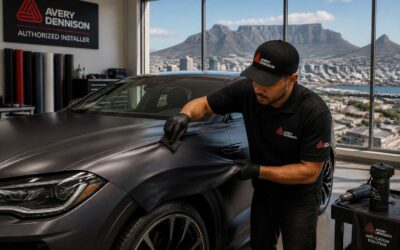
Installation follows a careful choreography. We work in a dust controlled bay where the air stays still. Each panel gets its own sheet, cut with magnetic strips and a blade that never touches the paint. A squeegee with a felt edge glides across the surface, persuading the material into each contour. Knifeless tape scores the finish, while a heat gun softens difficult angles around bumpers and side mirrors. The process demands patience, but the result feels like a second skin. Every installation follows the same rhythm:
1. Dry fit the panel to spot alignment issues
2. Position the material with hinge tape
3. Squeegee from the centre outward
4. Heat and stretch recessed areas
5. Trim edges with precision tools
The tools matter, yet experience carries the real weight. A steady hand and calm nerves transform a roll of vinyl into a seamless extension of the vehicle’s shape.
How Long Does a Wrap Installation Take?
The whole job, from the first design file to the day you collect the keys, usually takes three to five days. A small sedan can be done in two. A long wheelbase van might sit in the workshop for a full week.
The process behind a custom printed vehicle wrap south africa follows a predictable rhythm. Design approval, printing, lamination, surface preparation, and installation each take their own slice of time. Weather slows things down. Humidity affects how the film lays down.
- Design approval and colour proof: one day
- Printing and lamination: half a day
- Surface prep and masking: half a day
- Installation, trimming, and cure: two to three days
Rushing the final cure causes lifted edges and bubbles. Most vehicles leave within the week, and that waiting time is the price of a wrap that sits flush against every panel.
Understanding Pricing and Quotes in the SA Market
Pricing in the SA market is a layered estimate, not a single headline number. Every custom printed vehicle wrap South Africa project carries three distinct costs that first time clients forget to ask about: design and colour proofing, the vinyl itself, and installation labour. Fleet managers should also budget for surface preparation, since old fillers and paint contaminants will sabotage the film’s bond.
The process follows a deliberate rhythm from the first design file to the final cure. One installer quotes R8,000 for a small hatchback; another charges R15,000 for a long wheelbase van fitted with ladder racks and complex curves. The difference is material volume and workshop hours. For the custom printed vehicle wrap South Africa market, a reputable quote itemises each stage so you can verify what you are paying for. Anything else is a guess dressed up as certainty.
Quality Checks and Delivery
The design file holds the blueprint of the vehicle to come. From that first proof, the custom printed vehicle wrap south africa process moves through colour calibration, lamination, and precise plotting. Each panel is cut with margins for error, because vinyl remembers every hesitation. Installation begins in a dust controlled bay, where squeegees press out air and doubt in equal measure. Quality checks follow a quiet ritual:
- Edges are inspected for lifting.
- Seams are burnished until invisible.
- Curves are traced by hand.
Delivery means more than handing over keys. It means walking the client around the finished vehicle, checking reflections in the light, and confirming the film’s bond. Only then does the wrap earn its place on the road.
Design Tips for Maximum Mobile Advertising Impact
Creating High-Impact Visuals That Stand Out in Traffic
A vehicle moving at highway speed gives drivers about four seconds to absorb a wrap. That narrow window demands bold choices. High contrast between background and lettering is non-negotiable, and oversized type outperforms ornate scripts every time. Your design should prioritise legibility over subtlety. For a custom printed vehicle wrap south africa, the visual hierarchy matters more than any single element.
Distraction is your enemy, but so is monotony. Use the vehicle’s natural contours to create visual movement. A gradient flowing from bonnet to rear, or stripes that follow the body lines, guides the eye across the panel.
Consider these principles when briefing your designer:
– Limit the palette to three dominant colours
– Keep the primary message under five words
– Position the logo on rear doors for maximum dwell time
The most effective wraps read clearly at a glance, while rewarding closer inspection at traffic lights.
Choosing Colours That Complement the Vehicle
Human vision processes colour before it reads a single letter. The vehicle’s own paint is the first panel you work with. Ignore it and your wrap will fight the body instead of moving with it. A custom printed vehicle wrap south africa should respect the original colour’s undertones. A silver bakkie with cool blue graphics reads clean; the same blue on a warm white van turns muddy.
Consider how light moves across the metal. Dark colours absorb depth, while light panels reflect the harsh South African sun. Your chosen hues must sit with the vehicle’s natural base, not against it.
The variables that decide the outcome are few:
- Match the undertone: warm or cool
- Respect the roof and door recesses
- Test the palette on the actual vehicle colour
The body’s geometry already sets the mood, so use it! Let the wrap’s colour follow the panel lines, and the message will belong to the vehicle rather than sitting on top of it.
Readable Typography and Clear Calls to Action
The average glance at a moving vehicle lasts two to three seconds. That window decides whether your message enters memory or gets lost in traffic. Readable typography makes the difference. A custom printed vehicle wrap south africa needs bold sans-serif lettering with enough height to stay legible at speed. Thin scripts fail on freeways. Keep the core message to six words or fewer.
Clear calls to action direct the viewer’s next step. A phone number with a visible area code reads faster than a website address. So does a simple phrase like “Call now” or “Visit us today.” On a custom printed vehicle wrap south africa, the hierarchy must hold from ten metres away. If the eye does not reach the phone number, the layout needs another pass.
- High contrast between text and background
- A call to action near the rear door
- One font family used across the entire design
Incorporating Contact Numbers and Website URLs
Screen time on a phone matters, but a glance at a passing panel is measured in fractions. A custom printed vehicle wrap south africa must convert that glance into a stored memory, and contact details are the anchor.
A number with a visible area code reads faster than a long URL. Yet a website carries more information. The designer’s task is to balance both without crowding the layout. On a custom printed vehicle wrap south africa, place the phone number on the rear door and the URL beneath the logo. Drivers following behind see the number first! Pedestrians on the pavement see the URL as the car slows.
Keep every character thick enough to survive motion blur. White lettering on a dark background holds up better than black on white at midday glare. Shorten the URL wherever possible. A domain without www is easier to recall, and a phone number should never wrap across two lines.
Designing for Different Vehicle Shapes and Sizes
One design cannot serve every vehicle. A panel van and a delivery bakkie demand different visual logic. The long flank of a van offers a horizontal canvas. A compact car’s curves compress your message into something more intimate. A custom printed vehicle wrap south africa must respect the vehicle’s architecture.
Consider the viewing distance. A minibus taxi seen from across the highway needs bold geometry. A courier scooter, stopped at a robot, rewards closer inspection.
The wrap should follow the body lines. Window placement, door handles, and fuel caps interrupt the surface. Design around them.
Flat panels suit large text and logos. Curved surfaces need shorter, repeated messaging. Roof wraps work for pedestrians in taller buildings.
The eye travels differently on each shape. Test your layout at actual size, not on a screen.
Common Design Mistakes That Reduce Brand Credibility
Your vehicle is a moving billboard. The best mobile advertising lands in seconds, not minutes. A custom printed vehicle wrap south africa works when it communicates one clear idea.
Common mistakes erode credibility. Cramming every detail onto the panel is the first. If drivers cannot read your number at a glance, the wrap fails. Another is using low contrast colours that dissolve in harsh sunlight.
I have seen logos stretched beyond recognition. Keep your brand mark crisp! Avoid thin fonts, they vanish when the vehicle vibrates. Use bold shapes and short phrases. Position contact details where the eye naturally lands.
A simple hierarchy wins:
- One dominant visual element
- One clear call to action
- One readable font style
Aftercare, Maintenance, and Safe Removal
Daily and Weekly Cleaning Best Practices
The sun in South Africa is merciless. It finds every weakness in a custom printed vehicle wrap south africa and exploits it. Daily washing removes the grit that would otherwise grind into the vinyl film. Use a soft microfiber cloth, warm water, and soap with a neutral pH:
– Wash in sections, keeping the surface wet
– Rinse thoroughly to remove all soap residue
– Dry with a clean, soft towel
Weekly attention matters too. Bird droppings hold acid. Tree sap hardens. Both will etch through laminate if they sit unattended, so remove them within hours.
Removal at the end of the wrap’s life also demands care. Heat softens the adhesive. A professional uses a controlled heat gun and pulls at a low angle, leaving the original paint untouched. A vehicle should survive its second skin without a scar.
Handling Scratches and Minor Repairs
Scratches on a custom printed vehicle wrap south africa are rarely dire. The laminate absorbs most abrasions, protecting the vinyl below. A light scuff often buffs out with gentle heat and a soft cloth. Avoid abrasive polishes, which cloud the film.
Deeper cuts need a different approach. If vinyl tears, moisture creeps beneath and loosens adhesion. Attend to damage early. A professional can patch small areas with matching laminate. Larger sections may need replacement to keep the graphic coherent.
- Inspect wraps monthly for lifting edges, stone chips, or scratches
- Keep a record of the vinyl and laminate batch numbers
- Call an installer for repairs instead of DIY fixes
Safe removal handling matters too. A careless peel can pull paint or leave adhesive residue. Professionals use heat to soften the glue and roll the film back at a low angle. For minor repairs, the same principle applies.
Signs That Your Wrap Needs Replacing
A custom printed vehicle wrap south africa is only as durable as the care it receives. Regular washing removes brake dust and bird droppings before they damage the film. Parking under cover or using a carport reduces UV exposure and extends the wrap’s lifespan. In our experience, most wraps fail from neglect rather than poor materials.
Watch for warning signs that the film is failing. Cracking around curves, a chalky surface, or edges that curl back mean the vinyl has lost its integrity. Colour fading after years of harsh African sun also signals it is time for a replacement.
Removal needs equal care. Ripping off an old wrap can damage the vehicle’s clear coat. Professionals use heat guns to soften the adhesive and pull the film back at a low angle, leaving no residue behind.
Check monthly for these signs:
– Fading or chalky patches
– Peeling along door edges
– Cracks in the vinyl surface
– Loss of gloss despite regular cleaning
If any of these appear, schedule a replacement before the old film causes paint damage.
Professional Removal Without Damaging Factory Paint
Aftercare for a custom printed vehicle wrap south africa means guarding against the specific threats of our climate. UV rays and airborne dust degrade uncoated films. A weekly rinse with clean water and a microfiber mitt keeps grit from embedding in the surface. Use a pH-neutral soap to protect the laminate, and park in shade whenever possible. Extreme summer temperatures can soften the adhesive and accelerate edge lifting around curves.
For removal, never let anyone attack the wrap with a scraper. A professional uses a heat gun to warm controlled sections of vinyl. The film peels back at a low angle, pulling the adhesive away from the factory paint. Residue comes off with a citrus-based solvent. This method preserves the clear coat and leaves the bodywork ready for whatever comes next.


0 Comments