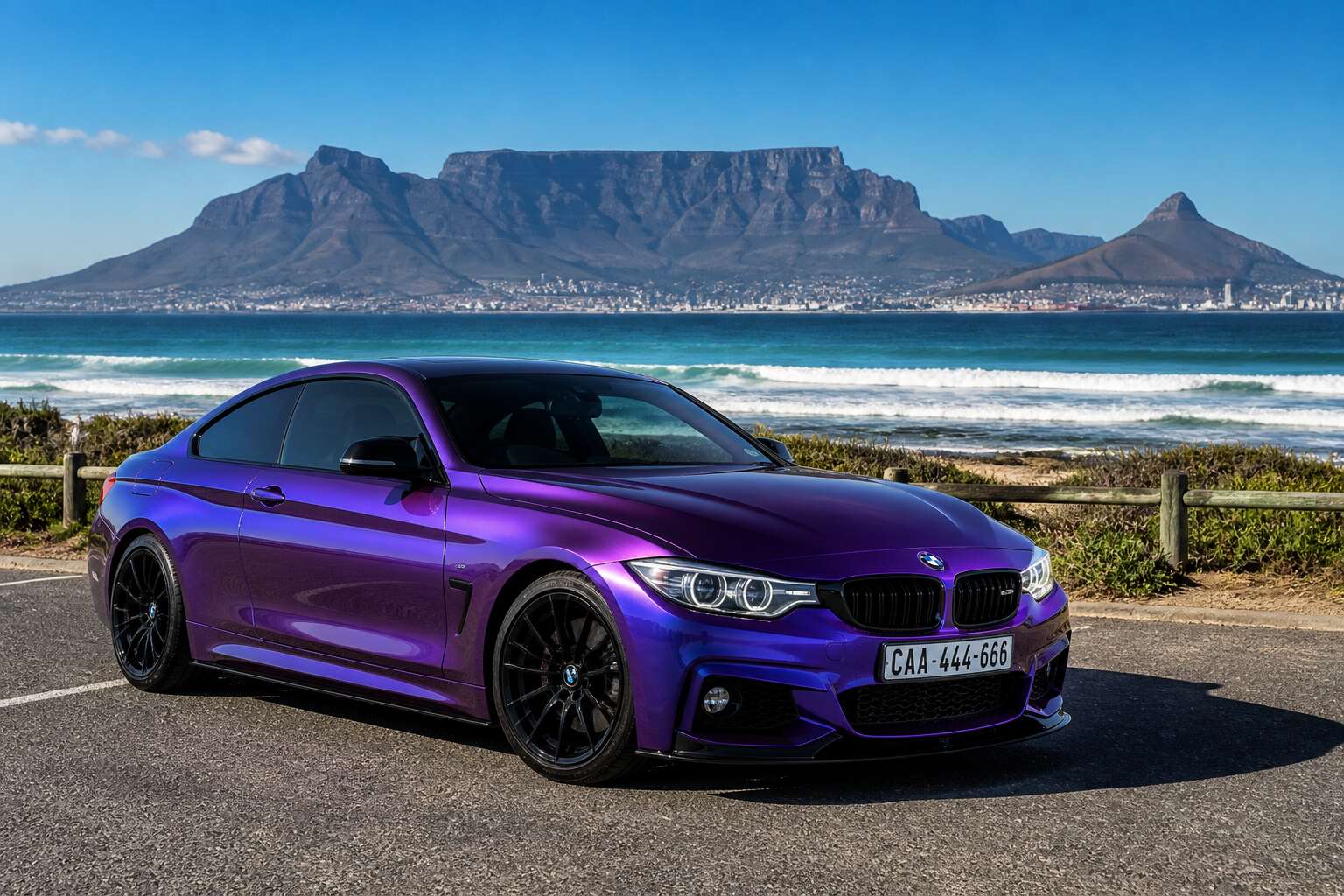
The Benefits of Vehicle Wrapping for Blouberg Drivers
Protection from Coastal Weather Elements
Blouberg’s ocean air carries a constant load of salt and moisture. That combination works on your car’s paint as a slow, corrosive process. Vehicle wrapping blouberg offers a physical barrier against this assault. The vinyl film takes the brunt of salt spray, wind-blown sand, and harsh UV rays that fade and dull unprotected surfaces.
Protection extends to several specific threats:
- Salt residue etching into clear coat
- Micro-abrasion from windblown sand
- UV degradation causing color fading
A wrap is sacrificial by design. It ages instead of your paint. When the film eventually shows wear, you remove it and find the factory finish underneath. For Blouberg drivers, that means a car that resists the coastal environment longer. Vehicle wrapping blouberg turns the ocean’s punishment into a replaceable surface.
Cost-Effective Customization Compared to Paint
A full respray can set you back R40,000 or more, and that is before you consider the labour of prepping the bodywork. Vehicle wrapping blouberg often comes in at a fraction of that price. The reversal aspect adds another layer of value. You can change your car’s colour for a season and return it to factory standard without a trace.
This is where the real potential lies. Beyond simple colour changes, the wrap opens a range of visual options that paint cannot achieve. Consider what you can specify.
- Solid or metallic hues
- Matte or satin finishes
- Custom graphics and gradients
- Colour shifting films
All this for a price that respects your budget. The protection from the previous section remains, but here the focus is purely on the transformation. For Blouberg drivers, the ability to personalise without permanent commitment changes what a car can be.
Advertising Opportunities for Local Businesses
Every kilometre driven in Blouberg is a potential impression. For a local business, a wrapped vehicle functions as a continuous advertisement, whether parked in Century City or crawling through rush hour. The cost per view is staggeringly low when compared to static billboards. We observe firms in hospitality and construction exploiting this with measurable success. The design determines the outcome. A chaotic wrap distracts the viewer, while a clean, high contrast message invites engagement. The specific advantages are clear:
– Targeted geographical reach, you only pay for exposure your vehicle actually generates.
– A fully wrapped fleet creates an unmistakable brand visual that dominates routes between Table View and Melkbosstrand.
The psychology is direct. A vehicle wrapping blouberg service can turn a standard bakkie into a persuasive asset. It does not shout, it simply repeats its message until the association becomes permanent. That is the power of ambient advertising, and vehicle wrapping blouberg is the mechanism local firms are now exploiting.
Preserving Your Vehicle’s Resale Value
A vehicle’s resale value is a ledger of its past, and every stone chip writes an entry. In Blouberg, the wind-driven sand and gravel act as an unforgiving auditor. A professionally installed vehicle wrapping blouberg solution creates a sacrificial layer over the factory lacquer, absorbing the kinetic abuse that would otherwise scar the paintwork permanently.
The vinyl itself degrades so your original finish doesn’t. When you eventually sell, removing the wrap reveals a pristine surface that appraisers reward with a higher figure. This is not speculative. The structured protection delivers a tangible return.
– It prevents oxidation from the constant sea spray.
– It shields against UV-induced colour fading.
– It masks minor surface scratches beneath the film.
That preserved finish, documented through a removal report, gives you leverage in negotiations. Vehicle wrapping blouberg is, in the strictest sense, an investment in the asset’s future currency.
Types of Vehicle Wraps Available in the Area
Full Colour Change Wraps
There is a distinct thrill in watching a familiar car roll out with a completely new identity. Full colour change wraps in Blouberg offer this transformation without the permanence of a respray. This option is less about protection and more about pure aesthetics, allowing you to flip the script on your vehicle’s personality entirely. You could be converting a white fleet car into a bold statement piece or simply shifting to a shade that stands out on Marine Drive.
The choice of finish plays a massive role in the final look. Whether you prefer the depth of a metallic, the smoothness of a satin, or the edge of a matte finish, the effects are immediate. Wrapping allows for effects that paint simply cannot achieve, such as a pearlescent shimmer or a colour that shifts with the light. Local installers in the area have access to a wide range of films to cater to this specific demand.
When you choose a full colour change for vehicle wrapping blouberg, you are deciding on the visual impact. It is a creative act, a way to express individuality through your ride. The texture of the film itself changes how the light hits the bodywork. For owners who want a unique look without the high cost of custom paintwork, this remains the most efficient route.
Consider the specific finishes available to you:
– Gloss films for a fresh, showroom finish
– Satin films for a subtle, sophisticated glow
– Matte films for a stealthy, modern presence
– Chrome or metallic films for high-impact shine
The installation requires a skilled hand, especially around the bumpers and side mirrors, to ensure the lines are seamless. The final result is a vehicle that feels brand new and entirely yours. It is a powerful way to own the streets, giving your car a bespoke look that is all about self-expression.
Matte and Satin Finishes
The most asked question at any vehicle wrapping blouberg installation bay is not about colour, but about texture. Matte and satin finishes differ from the high-gloss shine that dominates most parking lots. They offer a flat or softly reflective surface that changes character with the sun’s angle. The difference is noticeable the moment you run a hand across the surface, which you will do constantly.
These finishes require a different kind of care. A matte film will show every fingerprint and water spot, while satin sits somewhere between forgiving and finicky. For any vehicle wrapping blouberg project, local installers often recommend ceramic coating on top to ease the maintenance burden, but that is a separate discussion.
Here is what you need to know before committing:
- Matte absorbs light, creating a flat, understated presence.
- Satin reflects a soft glow that retains some depth.
- Both finishes hide minor paint imperfections, but they do not hide dirt.
Choosing between them comes down to how much attention you want. Not from neighbours, but from your own cleaning cloth.
Commercial Fleet Wraps
A commercial fleet is a repeated statement, a series of identical promises moving through traffic. In this area, the types of wraps available reflect how much risk a business wants to carry. The film itself is the first division, and the differences are practical.
- Cast films stretch around complex curves without lifting.
- Calendered films suit flat panels at a lower cost.
- Laminated films add a protective layer against scratches.
- Reflective films turn a van into a beacon after dark.
For any vehicle wrapping blouberg project, the choice hinges on how the fleet operates. A delivery van that parks under trees needs a different material than a vehicle that spends hours on open highways. The texture, the adhesive thickness, the sealing of edges, all contribute to a lifespan that outlasts the initial impulse to rebrand.
Partial and Accent Wraps
Most businesses don’t need a full wrap. They need visibility without the expense of covering every panel. That is where partial and accent wraps come in. For a vehicle wrapping blouberg project, a partial wrap covers the bonnet, doors, or rear, leaving the factory paint exposed elsewhere. This is a deliberate financial choice. You get the branding where it matters most, at the roadside, without paying for the roof.
Accent wraps take this further. They use stripes, shapes, or contrasting colours to break up a vehicle’s silhouette. A simple swoosh across the side creates a modern, custom aesthetic. These wraps work well on personal cars. They allow owners to express a style preference without committing to a full colour change.
The design is what distinguishes a good partial wrap from a poor one. The cut lines must align with the vehicle’s natural curves. A messy edge is immediately noticeable. A clean edge looks like a factory option. The material choice still matters, but the surface area is smaller, so costs stay manageable. For a quick rebrand or a subtle personal touch, the following options are popular:
- Stripes along the hood and boot for a sporty look
- Mirror caps and door handles in a contrasting shade
- Fenders with a solid graphic block
- A tailgate panel with contact details or a logo
This approach is practical for test marketing a new logo or graphic. If the design falls flat, you remove it without the expense of a full removal job. The vinyl protects the paint it covers, but the rest of the car remains exposed to the elements. Choose this route for a focused statement, not a comprehensive shield.
Paint Protection Film
Paint protection film serves one purpose: to protect the paint from physical damage. It is a clear layer that absorbs impacts from stones, gravel, and road grit. For a vehicle wrapping blouberg project, this film is applied to the front sections without altering the factory colour. The car’s appearance remains unchanged, which is the entire appeal.
The film’s thickness is its main advantage. It is thicker than a standard vinyl wrap, so it resists punctures and scratches. Minor scuffs disappear with heat from the sun or a hairdryer. Installation demands a dust free environment. I have seen installations last for years without yellowing! A specialist measures and trims the film to fit each panel precisely. Common areas for coverage are:
- The front bumper and bonnet
- The wing mirrors and headlights
- The door edges and sills
This is a practical upgrade for anyone who values a spotless finish.
The Vehicle Wrapping Process Explained
Initial Consultation and Design
Choosing a wrap starts with a conversation, not a catalogue. The initial consultation for vehicle wrapping blouberg involves a thorough inspection of your car’s panels, trim, and factory paint condition. We look for chips, rust, or previous repairs that could affect adhesion. This step is critical because hidden damage costs time later.
Next comes the design phase. Using your vehicle’s measurements, our designer creates a digital layout that accounts for curves, door gaps, and antenna mounts. A typical session covers:
- Seam placement for compound curves
- Print orientation for graphic panels
- Edge folding methods
The mockup is yours to revise until the proportions feel right. At this point, approval triggers production.
Surface Preparation and Cleaning
Dust is the enemy of adhesion. In vehicle wrapping blouberg, the paint must be spotless before any film touches your car. We start with a thorough wash using pH-neutral soap to strip surface grime without damaging factory clear coat.
Next comes decontamination. Iron fallout and tree sap embed themselves in the paint over time. A clay bar removes these particles, leaving the surface clean and smooth. Then we wipe every panel with isopropyl alcohol to eliminate oils and wax residue. Edge gaps and trim get extra attention; trapped moisture causes bubbles later. Door jambs and mirrors also need preparation if the wrap extends into recesses.
Finally, the car sits in a dust-controlled environment until the surface temperature matches the wrap’s requirements. Only then does installation begin.
Applying the Wrap with Precision
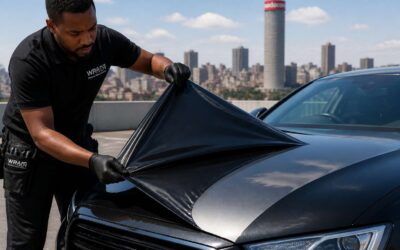
There is no such thing as a perfect wrap, only a patient installer. In vehicle wrapping blouberg, that patience shows up as controlled tension and even pressure. We pull the film taut, not stretched to its limit, then work a felt squeegee from the centre to the edges. This pushes out air without creating creases. Heat guns soften the material around mirrors and bumpers, allowing smooth conformance to complex curves.
A successful install depends on knowing when to stop. Overworking film causes thinning. Underheating leads to lifting. Our technicians follow a staged approach:
- Anchor the film using low-tack magnets to hold alignment.
- Press each section with overlapping squeegee passes.
- Heat relief cuts and tuck edges before the adhesive sets.
The result is a surface that meets factory lines exactly!
Post-Installation Inspection and Delivery
Once the last edge is tucked, the real scrutiny begins. We roll the vehicle into bright light and walk around it like art critics with a grudge. Every seam, every corner, every reflection gets a once over.
The inspection checklist is short but unforgiving:
- Edges that lift or curl
- Bubbles or dust trapped beneath the film
- Colour consistency across panels
If anything looks off, we fix it before you ever see it. Then we hand the keys back with a few simple care notes. Most people treat their freshly wrapped car like a museum piece for the first week. That is fine by us. A little caution goes a long way. Vehicle wrapping blouberg done right means you drive away without a second thought.
Choosing a Professional Vehicle Wrap Installer in Blouberg
Experience and Portfolio
Cape Town’s Atlantic seaboard is a harsh mistress for automotive finishes, and the decision to entrust your vehicle’s exterior to another pair of hands is not one to be taken lightly. The difference between a stunning transformation and a peeling, bubbled disaster often comes down to the individual wielding the squeegee. When you search for vehicle wrapping blouberg, you are not merely looking for a service provider; you are looking for a custodial craftsman.
Experience in this field is measured in the tactile understanding of vinyl’s behavior under tension. A senior installer knows that the material has a memory, and that forcing it around a sharp contour without the correct heat will result in a frustrated return. Look for a workshop that has been operating for years, not months, and whose portfolio showcases a diverse range of vehicles, from the humble hatchback to the curvaceous supercar. The senior installers will treat your paintwork with the deference one would afford a museum piece, ensuring that the adhesive never meets a surface that has not been meticulously decontaminated.
The portfolio is your window into the installer’s soul. Do not be satisfied with glossy photographs of completed cars alone. Ask to see the details, the tucked edges under the door handles, and the precision of the cuts around the badges. A reputable installer will gladly show you their process, and they might even walk you through the installation bay to inspect the vehicles currently in progress. Instead of trusting the finished product alone, examine the ability to match complex patterns or execute a seamless color transition. The absence of visible seams on the vehicle wrapping blouberg market is the true hallmark of excellence.
When you review their previous work, pay attention to the specific vehicles they have serviced. You should look for evidence of the following:
– Clean, tucked edges that do not lift at the door jambs.
– A flawless finish on complex curves such as bumpers and side mirrors.
– The absence of air bubbles or dust contamination trapped beneath the film.
Seeing these elements in past projects gives you the assurance that your own vehicle will be handled with the same level of reverence. These are not just technicalities; they are the visible proof of a professional’s obsession with perfection. A builder is only as good as the foundation they lay, and in this industry, the foundation is the pre-installation preparation and the skill to read the body lines of your car.
Quality of Materials Used
Not all vinyl films are created equal. The gulf between a budget roll and a premium cast film is enormous. Cast vinyl conforms to complex curves without lifting, while calendered alternatives shrink and crack under the Cape sun. The adhesive chemistry matters too. A low tack, air release adhesive allows the installer to reposition the film, then bonds permanently. This is where the vehicle wrapping blouberg market separates the professionals from the amateurs.
Premium installations rely on materials that withstand this coastline’s brutal UV and salt spray. Consider what the best shops specify!
- Cast polyvinyl chloride with a rated outdoor lifespan of ten years.
- Air egress adhesive channels that release trapped air during installation.
- A laminated clear coat on high impact zones like bumpers and mirrors.
Ask your installer to name the manufacturer and show you the technical data sheet. Ask whether the warranty covers labour or only the film. Their answers reveal far more than any portfolio photograph.
Warranty and Aftercare Services
The warranty behind a vehicle wrapping blouberg project reveals more than portfolio photos ever will. A professional installer commits to written terms covering both the film and the labour. Ask your vehicle wrapping blouberg installer who responds when vinyl lifts at the edges after months of southeaster wind. Ask what happens if gloss fades unevenly on the sea-facing side! The answers separate shops that stand behind their work from those that vanish after payment.
Aftercare carries equal weight. Salt spray and sand wear down unprotected edges. A proper hand wash routine and sensible storage advice extend the wrap’s life. Quality aftercare programmes include:
- a scheduled inspection after the first coastal season
- specific washing guidance for salt and grit
- a named contact for warranty claims
- documentation of film batch and installation date
A specialist who volunteers these details demonstrates quiet confidence in their own work.
Reading Customer Reviews and Testimonials
Reputation depends on what customers say after payment. A single frustrated review often outweighs fifty satisfied ones, because anger reads as honesty. When examining customer reviews for vehicle wrapping blouberg, ignore star counts and read the verbs. Words like ‘communicated’ and ‘fixed without fuss’ reveal process. Adjectives like ‘amazing’ reveal nothing.
A reliable installer accumulates reviews that mention specific events:
- how they handled a misaligned panel
- whether the reviewer returned for a second wrap
- how the film survived the first southeaster season
These details show the installer’s behaviour. Testimonials that name staff or describe the workshop floor suggest real engagement. One complaint about edge lifting may be an outlier. Three are a confession.
Maintaining Your Vehicle Wrap in Blouberg’s Climate
Regular Washing Techniques
Blouberg’s coastal air is deceptively harsh on vinyl. Salt particles land on the surface and, once mixed with morning dew, turn into an abrasive grit. That is why your vehicle wrapping blouberg needs a washing routine that goes beyond a quick rinse. I always advise owners to treat their wrap like a good pair of leather boots, with gentle, consistent care.
Start with a pre-rinse using low pressure to lift loose sand and salt. Then follow a simple sequence:
- Use a pH-neutral shampoo, never dish soap.
- Wash with a microfiber mitt, working top to bottom.
- Rinse thoroughly and dry with a soft cloth.
Avoid high pressure nozzles near the edges, as they can lift the film. Also, skip waxing for the first month after installation. The salt in Blouberg will test your wrap, but a steady washing rhythm keeps it looking sharp for years.
Avoiding Harsh Chemicals and Abrasives
Blouberg’s sea breeze carries airborne sand and pollutants that settle on your wrap. Reaching for household cleaner seems logical, but many contain ammonia or alcohol. These chemicals break down the vinyl’s clear coat over time. For vehicle wrapping blouberg, solvent based products are a problem. They leave residue and weaken the film’s edges. Abrasives are equally risky. Scouring pads and stiff bristles create micro scratches that collect grime and dull the colour.
Use dedicated wrap safe products. Check the label for pH neutrality. Avoid anything with petroleum distillates. The right approach is simple:
- Use a soft, lint free cloth for wiping
- Choose a gentle car wash soap without degreasers
- Never use a pressure washer on a hot wrap
Your wrap in Blouberg needs a chemical free routine. Harsh products void the warranty and shorten its lifespan.
Parking Considerations in Coastal Areas
Parking in Blouberg means dealing with the elements. The sun is strong until mid afternoon, then the southeaster brings grit and salt. Your vehicle wrapping blouberg endures this cycle every time you leave it exposed. A shaded spot is necessary, not optional!
Consider these habits for coastal parking:
- Seek north facing shade during summer months
- Keep the wrap away from sprinklers and irrigation lines
- Use a car cover if you park for more than a few hours
Bird droppings are another factor. They etch into vinyl faster than paint. The acidic residue bonds with the film if left for a day. Also, the wind whips dust against the wrap’s edges. Parking facing away from the prevailing breeze helps. For vehicle wrapping blouberg, your parking routine matters as much as your cleaning routine.
Long-Term Care and Inspection Tips
A vinyl wrap in Blouberg faces constant exposure to salt and sun. These elements never rest after installation. They test the film’s adhesive and top coat. I advise inspecting your vehicle wrapping blouberg every three months.
Start with the edges, where lifting appears first. Run a clean finger along each panel’s perimeter. Feel for raised bits. Check the surfaces facing the sea breeze. Examine door handles and mirror bases for micro-cracks. Also, note any uneven dullness in the gloss. That signals top coat breakdown. A routine helps:
- Inspect edges after a strong southeaster.
- Check under wipers and the fuel cap for grit.
- Feel for rough patches from embedded sand.
Catching these signs early prevents costly repairs. The wrap’s longevity depends on this vigilance.

0 Comments